
A better flow
starts here.
Warehouse space
A practical space guide
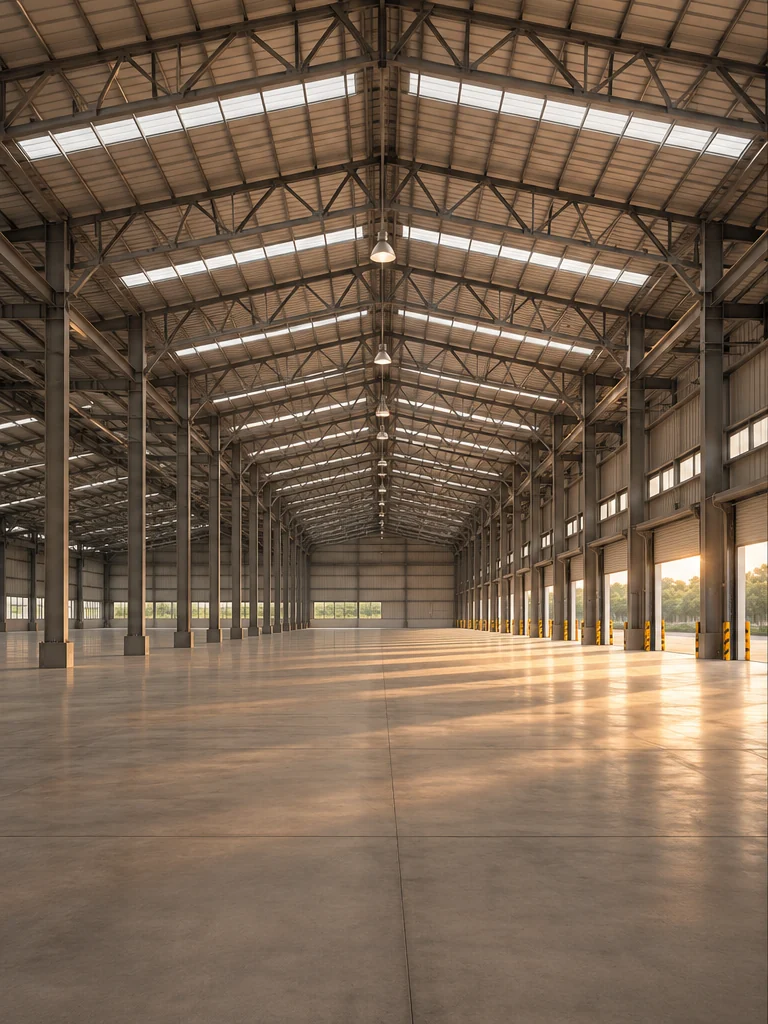
The right warehouse connects the way goods arrive, stay and leave. Start with the products, the storage method and the volume of movement rather than a square-foot requirement alone. A distribution hub, fulfilment operation and longer-term storage facility can need very different buildings.
- Goods & storage method
- Docks & staging
- Vehicle circulation
- Operating hours
Follow the goods
Describe the incoming and outgoing flow, including seasonal peaks. Note pallet sizes, handling equipment, racking plans and the space required for checking, packing and dispatch. Allocate working space around the stored goods. If returns, quarantine or temperature-sensitive stock are involved, include their distinct handling requirements in the first brief.

Look beyond the quoted area
Compare clear height, usable dimensions, column positions and floor capacity against the storage layout. Ask how the area is measured and which ancillary spaces are included. Consider the relationship between dock height, vehicle type and material handling equipment. Fire and life-safety requirements need a building-specific assessment by appropriate specialists.
Plan for the busiest hour
Visit the approach road and yard with the operational pattern in mind. Consider simultaneous arrivals, loading queues, gate controls and staging space. Confirm operating hours, utility provision and the scope of maintenance responsibilities. The lease conversation should reflect how the facility will actually be used, including growth or a second shift.
Make it
your brief.
Tell us the goods category, approximate storage volume, floor area, preferred service area, vehicle types, dock requirements and target occupation date. Add any special handling or environmental needs.
Discuss warehousing